• 6604cbd7wl
  • 6604cbd49a
  • 6604cbdmjj
  • 6604cbdm2i
  • 6604cbdb0a
Leave Your Message
0%

China’s really become a big player when it comes to Kitchen Sink products, supplying everything from homes to hotels, restaurants, and property developers all around the globe. The manufacturers there offer a pretty good mix—things like stainless steel, granite composite, ceramic, and even handmade options. But honestly, just because a factory is huge doesn’t automatically mean they’re putting out top-notch quality.

A good starting point is to think about what David Kohler, the CEO of Kohler Co., always emphasizes: “Design should improve the way people live.” That really hits home when you’re sizing up Chinese suppliers. A kitchen sink isn’t just about how it looks—though that’s important—it needs to drain well, resist stains, stay quiet during use, and hold up after repeated washing. Sometimes, the little details make all the difference—things like a deep bowl, a snug-fitting waste, or smooth welding around the corners.

In this overview, I’ll introduce some of the leading Chinese manufacturers like JOMOO, OULIN, BONKE, GORLDE, Primy, Tanso, and Weinuo. Each of these companies has its own strengths—some focus on high-volume production with competitive prices, while others put more into handmade finishing, smart accessories, or good export certifications. Just a heads-up: the quality can vary even within their collections, so don’t rely solely on rankings or catalog images.

No list is perfect, of course. To really get a sense, it’s worth checking product samples, doing factory visits if possible, reading warranty terms, and listening to what other customers are saying. Pay attention to details like steel grade, thickness, sound insulation, surface finishes, and how solid their after-sales support is. Also, always verify those fancy certification claims—they’re not all created equal.

At the end of the day, the “best” kitchen sink manufacturer isn’t necessarily the cheapest or the most well-known. It’s the one that fits your specific project, budget, design style, and quality expectations. Figuring that out means looking for real evidence—things like actual product quality and support—not just marketing talk.
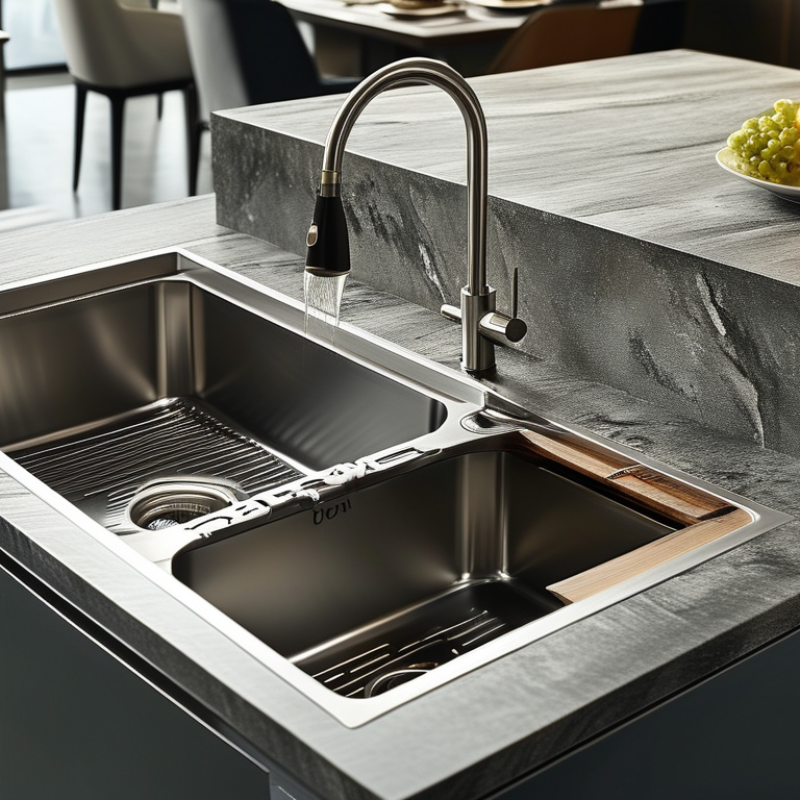
What Are the Top Kitchen Sink Manufacturers in China?

What Defines a Top Kitchen Sink Manufacturer in China?

A top kitchen sink manufacturer in China is defined by more than a polished showroom. It controls material quality, production accuracy, and after-sales support. Experienced factories usually provide stainless steel grades, thickness data, and surface-finish samples. They should explain these details clearly, without hiding behind vague marketing terms.

Production consistency matters every day. Inspectors should check bowl depth, corner radius, drain alignment, welding quality, and sound-deadening pads. A small drain mismatch can cause installation problems on site. Reliable manufacturers use incoming material checks, in-process inspections, and final testing. Water-leak tests are essential. Packaging also deserves attention, especially for sinks shipped across long distances. Crushed corners often reveal weak export preparation.

A capable manufacturer can manage custom sizes, mounting styles, and packaging requirements without losing control of quality. It should maintain traceable inspection records and communicate realistic lead times. Relevant product testing and documentation support buyer confidence, but certificates alone prove little. Factory visits, sample approval, and repeated batch checks remain valuable. No factory is flawless. Even strong suppliers may overlook a finish variation during busy periods. That possibility requires corrective procedures, not empty promises. Buyers should ask how defects are recorded, who approves repairs, and how replacement parts are handled. Quiet, practical answers usually reveal more than a large production floor.

China’s Leading Kitchen Sink Manufacturers at a Glance

What Are the Top Kitchen Sink Manufacturers in China?

China’s Leading Kitchen Sink Manufacturers at a Glance

China’s kitchen sink manufacturing sector serves residential, hospitality, and commercial projects worldwide. Leading factories usually combine stainless steel forming, precision welding, surface finishing, and export packaging under one roof. Many work with 304 stainless steel, while some offer 316 options for harsher environments. Material certificates matter more than polished showroom photos.

A reliable manufacturer should show clear production evidence. Look for laser cutting equipment, deep-drawing presses, and separate inspection stations. Inspectors may check bowl depth, drain alignment, weld quality, and surface scratches. A practical factory can also provide sample approval records and batch traceability. Ask how rejected units are handled. Small details reveal real quality control.

Manufacturers often support custom sizes, corner radii, sound-absorbing pads, and matching Kitchen Sink Faucets. Their engineering teams can adjust mounting holes and drainage layouts for different markets. Export experience helps with carton strength, labeling, and installation instructions. Still, factory claims need verification. A beautiful sample may hide inconsistent polishing across a full container. No factory gets every detail right. That is why independent inspections, repeated sampling, and written specifications remain useful, even with experienced suppliers.

Key Product Categories and Materials Offered by Top Manufacturers

China’s leading kitchen sink manufacturers mainly serve four product categories: single-bowl, double-bowl, workstation, and farmhouse sinks. The 2024 NKBA Kitchen Trends Report highlights multifunctional work zones and easier cleaning as major kitchen priorities. This explains the growth of workstation designs with integrated grids, colanders, and sliding boards. Yet accessories can complicate installation. Buyers should check cabinet width, drain position, and countertop support before ordering.

Material selection shapes both performance and appearance. Stainless steel remains popular for commercial-style kitchens because it resists impact and tolerates high temperatures. Thicker 16-gauge steel usually feels quieter and stronger, although sound-deadening pads still matter. Granite composite offers a stone-like surface and strong scratch resistance. Fireclay provides a smooth, bright finish, but heavy cookware can chip its edges. A Black Kitchen Sink in matte composite can create a sharp visual contrast, while darker finishes may reveal mineral deposits more clearly.

The Freedonia Group’s residential kitchen and bathroom products research identifies replacement activity and premium remodeling as important demand drivers. Manufacturers therefore offer handmade finishes, custom dimensions, and tighter quality inspection. In practical factory evaluations, inspectors should examine weld consistency, overflow alignment, coating uniformity, and water drainage. Reported specifications are useful, but not always enough. Some product pages simplify noise, durability, and maintenance claims. Samples, installation drawings, and independent test records deserve equal attention.

How Chinese Sink Manufacturers Compare in Quality and Innovation

Chinese kitchen sink manufacturers now compete on more than low pricing. World Stainless reported approximately 58.4 million tonnes of global crude stainless steel production in 2023. China contributed about 36.2 million tonnes, or nearly 62%. This large industrial base supports faster material sourcing, automated welding, and flexible production. However, volume does not automatically prove quality.

In factory evaluations, buyers should inspect steel thickness, weld polishing, drainage design, and sound insulation. A reliable Undermount Kitchen Sink should have stable dimensions and a smooth, continuous rim. These details affect installation and long-term cleaning. Many Chinese manufacturers also use laser cutting, precision forming, nano-surface treatments, and water-flow testing. Innovation is visible in sloped bowls, integrated accessories, and quieter coatings. Still, marketing claims can be vague. Independent test records matter more than attractive samples.

Tips: Request material certificates, dimensional inspection reports, salt-spray results, and batch photographs. Check whether testing follows relevant ISO or national standards. Confirm the actual steel grade, not only the phrase “premium stainless steel.” The International Organization for Standardization links ISO 9001 with controlled quality-management processes, but certification cannot replace product inspection. Small imperfections remain possible, especially during customized production. A careful buyer should review several samples before approving a large order.

Certifications, Production Capacity, and Export Standards

What Are the Top Kitchen Sink Manufacturers in China?

Reliable kitchen sink manufacturers in China distinguish themselves through verified certifications, stable production, and consistent export procedures. ISO 9001 can indicate controlled quality systems, but buyers should check its current scope and issuing body. Product testing may cover corrosion resistance, drainage performance, welding strength, and food-contact safety. A certificate alone proves little without matching factory records.

Production capacity deserves practical inspection. Ask how many forming lines operate daily, how stainless steel coils are stored, and whether polishing is automated or manual. A capable factory should explain its monthly output, lead time, mold availability, and inspection checkpoints.

Samples should show even corners, smooth welds, accurate drain openings, and a quiet underside coating. Small details matter.

Export standards vary by destination. Manufacturers should provide material reports, packing specifications, labeling files, and test documents suited to the target market. Stainless steel grade and thickness must appear clearly on purchase documents. Container loading also needs attention; poor protection can scratch sinks before arrival. I would request a pre-shipment inspection, even after a successful sample approval. Factories can improve, but processes can also drift. That uncomfortable possibility deserves regular review.

How to Choose the Right Chinese Kitchen Sink Manufacturer

Choosing the right Chinese kitchen sink manufacturer requires more than comparing online prices. Start by checking factory experience, production capacity, and material traceability. Request stainless steel grades, thickness records, and recent quality inspection reports. A reliable supplier should explain these details clearly.

Order a physical sample before discussing large volumes. Examine the sink under bright light. Check the welds, drain opening, corner radius, and sound-deadening pads. A White Kitchen Sink should have an even finish, without stains, pinholes, or visible color differences. Ask how the coating resists heat, scratches, and household cleaners. Small flaws often appear after installation, not in product photos.

Tips: Visit the factory when possible, or arrange a live video inspection. Compare the sample with the approved drawing. Confirm packaging with drop-test photos and corner protection. Discuss minimum order quantity, production lead time, spare parts, and replacement procedures in writing. Ask whether inspectors check every sink or only random units. This detail matters.

Communication is another practical test. Send the same technical questions to several manufacturers and compare their answers. Vague replies may signal weak process control. However, even a responsive supplier can make mistakes. I would leave room for rechecking measurements, finishes, and shipping dates. A signed specification sheet protects both sides and reduces avoidable surprises.

What Are the Top Kitchen Sink Manufacturers in China? - How to Choose the Right Chinese Kitchen Sink Manufacturer

Evaluation Dimension Common Chinese Manufacturing Profile Typical Data or Range What Buyers Should Verify
Primary Production Regions Metal kitchen-sink manufacturing is concentrated mainly in coastal industrial clusters. Guangdong, Zhejiang, Jiangsu, Fujian, and nearby manufacturing areas Factory address, production site ownership, export history, and distance to the loading port
Main Product Material Stainless-steel sinks are the most widely sourced category for residential and commercial projects. 304 stainless steel is common for premium residential use; 201 stainless steel is generally positioned as a lower-cost option Material grade, thickness, chemical composition, corrosion resistance, and third-party test reports
Sink Construction Manufacturers commonly offer pressed, handmade, welded, and hybrid constructions. Pressed sinks are suited to standardized volume production; handmade sinks allow more flexibility in dimensions and corner details Weld quality, corner radius, bowl geometry, flatness, overflow design, and dimensional tolerance
Surface Finishes Common finishes include brushed, satin, mirror-polished, PVD-colored, and nano-treated surfaces. Brushed and satin finishes are widely used because they reduce the visibility of minor scratches and water marks Finish consistency, coating adhesion, salt-spray performance, scratch resistance, and cleaning instructions
Common Product Sizes Factories usually produce standard single-bowl, double-bowl, workstation, bar, and custom-size models. Typical household sink widths range from approximately 400 mm to 900 mm, depending on bowl configuration and installation method Cabinet compatibility, cutout dimensions, bowl depth, drain position, and drawing approval process
Installation Options Most established suppliers support top-mount, undermount, flush-mount, and apron-front configurations. Installation compatibility depends on rim design, flange dimensions, cabinet structure, and countertop material Accurate installation drawings, templates, mounting accessories, seal compatibility, and after-sales support
Customization Capability Experienced factories can customize bowl size, drain location, corner radius, logo-free packaging, and accessory combinations. Custom tooling, special dimensions, and new surface treatments may require additional tooling or development charges Engineering drawings, prototype approval, tooling ownership, sample lead time, and change-control procedures
Quality Management Reliable export-oriented factories normally use incoming-material checks, in-process inspection, and final inspection. Inspection points commonly include dimensions, welding, surface finish, leakage, accessories, and packaging Quality manual, inspection records, corrective-action reports, sampling standard, and independent pre-shipment inspection
Certifications and Compliance Compliance requirements vary according to the destination market and whether the sink is sold with plumbing accessories. Possible requirements include food-contact material declarations, restricted-substance compliance, packaging regulations, and local plumbing standards Certificate validity, test laboratory, applicable product model, declaration of conformity, and destination-country requirements
Order Quantity and Lead Time Standard models generally have lower minimum-order requirements than customized products. Production time often depends on model availability, order quantity, finish, packaging, and tooling requirements Written quotation, minimum order quantity, sample lead time, production schedule, and capacity during peak seasons
Packaging and Export Readiness Export-capable suppliers commonly provide individual cartons, protective film, molded protection, palletization, and container loading plans. Packaging should protect corners, drains, exposed finishes, and accessories during multi-stage transportation Drop-test approach, carton specifications, loading photos, container utilization, and damage-claim procedure
Supplier Selection Priority The best supplier is not necessarily the lowest-cost supplier; product consistency and documented capability are critical. Recommended comparison factors: material accuracy, quality stability, customization, delivery reliability, communication, and total landed cost Compare approved samples, audited factory information, total quotation terms, warranty coverage, and references from the same target market

Note: The ranges and profiles above are general sourcing references. Final specifications, certifications, pricing, minimum order quantities, and lead times should be confirmed directly with each qualified manufacturer.

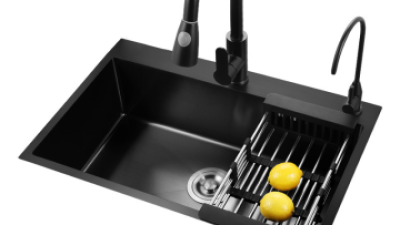
Black Nano Stainless Steel Single Bowl Kitchen Sink: Style, Durability, and Everyday Kitchen Performance

A black nano stainless steel single bowl kitchen sink brings a refined, modern look to spaces that demand practical performance. Its deep basin accommodates large cookware, baking trays, and barware, while the single-bowl design supports flexible washing and food-preparation routines. The dark nano finish adds visual depth and can help reduce the appearance of water spots, fingerprints, and minor surface marks, making it suitable for contemporary kitchens, outdoor prep areas, bars, and restaurants.

Material choice is equally important in demanding environments. According to World Stainless’s 2023 industry statistics, global crude stainless steel production reached approximately 58.4 million tonnes, reflecting the material’s broad use in construction, food service, transportation, and household equipment. Stainless steel is valued for its strength, corrosion resistance, and relatively easy maintenance. For everyday care, rinsing away salt or acidic residue and drying the basin after use can help preserve the finish, particularly in busy commercial kitchens or garden settings exposed to changing weather.

The sink’s versatility makes it practical for both professional and residential applications. In a restaurant or bar, the spacious bowl can support frequent rinsing and cleaning; in a home kitchen, it provides room for oversized utensils and meal preparation. The National Kitchen & Bath Association’s recent design research continues to identify durability, easy cleaning, and functional storage as major priorities in kitchen planning, qualities that complement a robust single-bowl sink. Its combination of black styling, durable stainless construction, and adaptable installation makes it a useful choice for kitchens, backyards, and gardens.

FAQS

: What defines a reliable kitchen sink manufacturer in China?

: It controls materials, production accuracy, inspections, packaging, and after-sales support. Clear records matter.

Which material details should buyers request?

Request the stainless steel grade, thickness, material certificates, and surface-finish samples. “Premium steel” is too vague.

What production checks are important?

Inspectors should check bowl depth, corner radius, drain alignment, welding, and sound-deadening pads. Small errors create installation problems.

How can buyers test sink quality before ordering?

Approve several samples and request water-leak tests, dimensional reports, and batch photographs. One sample is not enough.

What signs show accurate manufacturing?

Look for smooth welds, even corners, stable dimensions, aligned drains, and continuous mounting rims. Details reveal consistency.

How should buyers evaluate factory capacity?

Ask about forming lines, daily output, coil storage, polishing methods, mold availability, and realistic lead times. Large buildings prove little.

Which export preparations deserve attention?

Confirm packing specifications, labeling files, inspection documents, and container-loading methods. Weak packaging can crush corners.

Do certificates guarantee reliable sink quality?

No. Certificates support confidence, but factory records, product testing, and repeated inspections remain necessary. No factory is flawless.

How should customized orders be managed?

Confirm sizes, mounting styles, drain positions, finishes, and packaging before production. Customization increases risk.

What should happen when defects appear?

The supplier should record defects, approve repairs, and explain replacement-part procedures. Promises are not procedures.

Conclusion

China has become a major source of kitchen sinks, offering manufacturers with diverse capabilities in stainless steel, granite composite, ceramic, and other durable materials. A top Kitchen Sink manufacturer is typically defined by consistent product quality, modern production technology, strict quality control, responsive customization services, and the ability to meet different market requirements. Leading manufacturers may provide various sink styles, including undermount, top-mount, farmhouse, workstation, single-bowl, and double-bowl designs, serving both residential and commercial applications.

When evaluating suppliers, buyers should consider certifications, testing procedures, production capacity, delivery reliability, packaging standards, and experience with international export requirements. Quality and innovation can be assessed through material thickness, surface treatment, structural design, water resistance, noise reduction, and functional accessories. The right Chinese manufacturer should offer a balance of competitive pricing, dependable quality, flexible customization, transparent communication, and after-sales support. Careful comparison of samples, factory capabilities, compliance documents, and long-term service can help buyers select a reliable partner for their target market.


Nathan

Nathan

Nathan is a dedicated marketing professional at Ainsworth Smart Appliances (Zhuhai) Co., Ltd., where he brings a wealth of knowledge and expertise in the smart appliance industry. With a passion for innovative technology and consumer electronics, Nathan plays a crucial role in elevating the......
Previous Best Touchless Soap Dispenser for Your Business Needs?